The national value of a volunteer hour increased 3.9% in 2025, rising to $36.14 according to Independent Sector. For Pickens County Habitat for Humanity, that number means something concrete: lower mortgage payments for local families.
Habitat homebuyers purchase their homes through an affordable mortgage program. Every dollar saved during construction is a dollar that doesn't get added to what a family owes. When volunteers show up to a build site, they are cutting the cost of the home, which keeps monthly payments within reach.
In the first quarter of 2026 alone, volunteers here contributed 718 hours. At the current national rate, that works out to nearly $26,000 worth of labor donated across construction sites, the office, committees, and board service. All in 90 days.
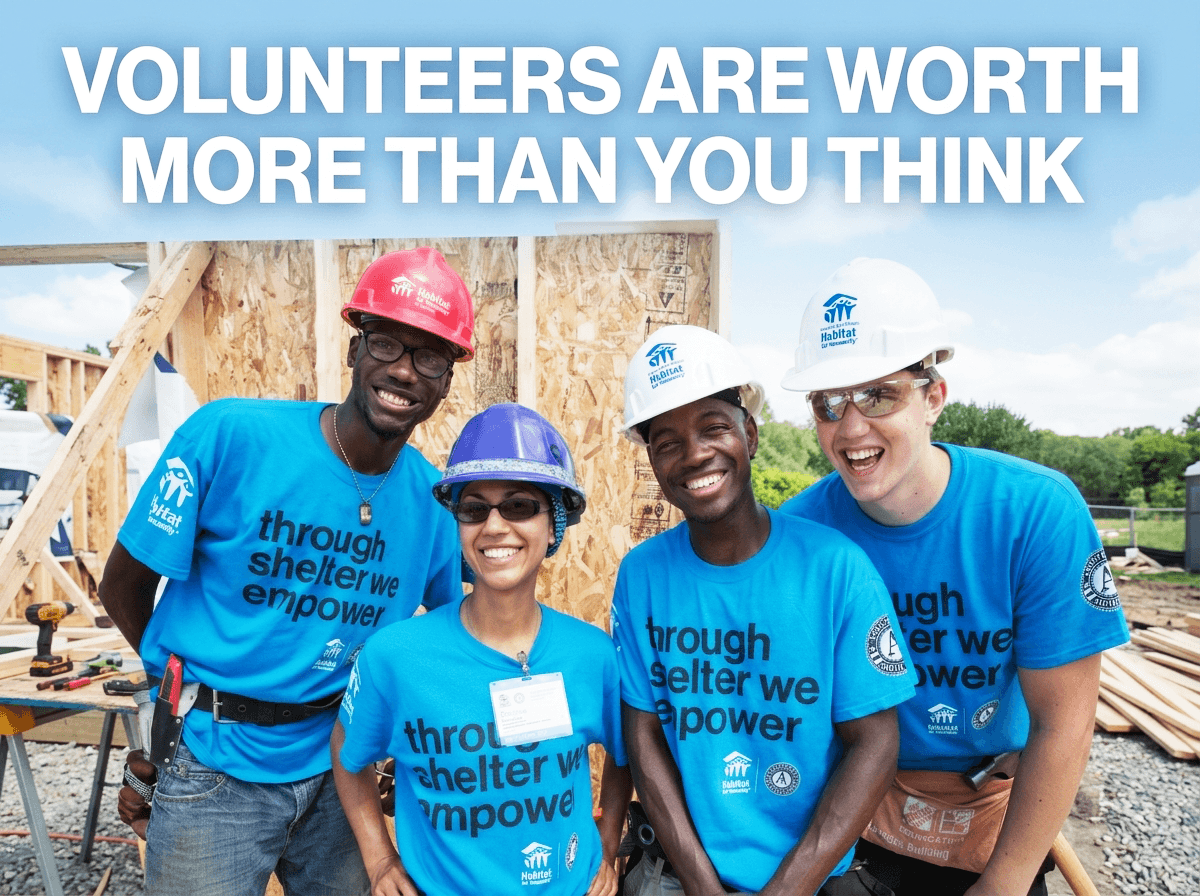
Construction drove the bulk of it: 576 hours across active build sites, with 119 unique volunteers working alongside staff and partner families. Others kept operations running through office support, outreach, and organizational leadership. Each role frees up resources that stay focused on building homes.
The math compounds over the life of a project. Shave $30,000 to $50,000 off construction costs and that savings isn't sitting on a spreadsheet. It becomes a lower mortgage balance and a lower monthly payment for the family moving in. Imagine the gratitude you would feel if someone saved you $30,000 on the cost of your home.
And here's the thing about volunteering that doesn't always make it into the conversation: it gives back.
People who volunteer regularly report lower stress, stronger friendships, and a clearer sense of purpose. Research links consistent service to lower rates of depression and measurably slower cognitive decline, with real benefits showing up at just two to four hours a week. For businesses, a build site makes for a better team-building day than most: employees who volunteer together report stronger working relationships and higher job satisfaction.
For younger volunteers, it follows them into their careers too. Volunteers are 27% more likely to land a job than peers with comparable backgrounds, and showing up consistently for something real, something where the result is a finished house and a family with keys in their hand, tells a future employer something a resume line can't.
As building costs keep rising nationwide, volunteer labor remains one of the few ways a community can directly pull housing costs down. Every hour donated goes into the equation that makes ownership possible for someone who might otherwise be priced out.
At Habitat, volunteers build more than walls. What could you build if you got involved?